Eternal Vow
Full-stack, Next.js•2024
Eternal Vow sells digital wedding invitations, which means traffic arrives in bursts when a couple shares a link and never forgives a slow page.
The platform was rebuilt front to back, alone, on top of the parts that were costing the business money.
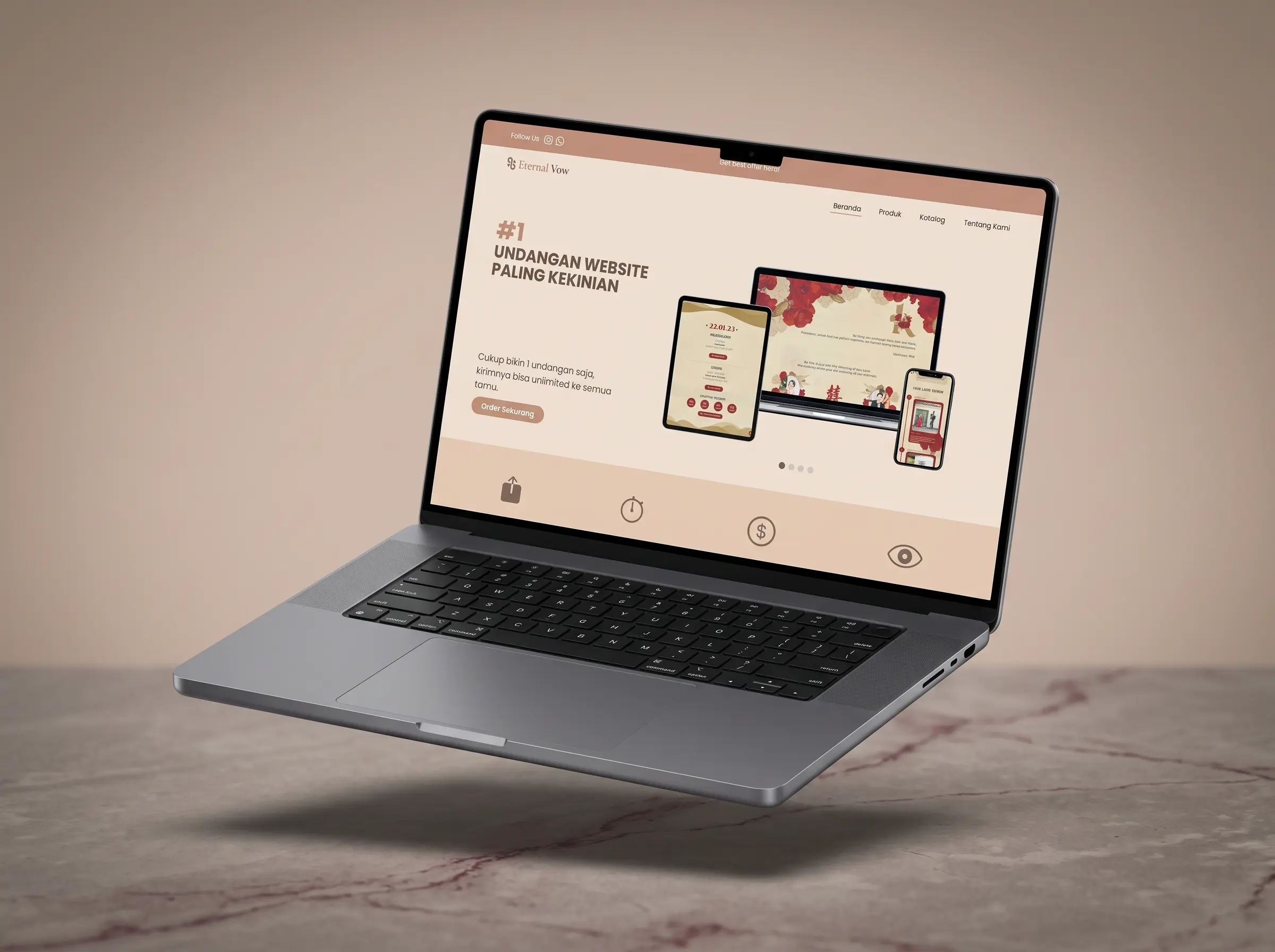
The stack was the outage.
The platform went down often enough that downtime was budgeted for rather than fixed. Pages were slow, layouts broke on the phones most guests actually use, and every invitation view hit the database for content that had not changed since it was written.
Each of those failures lands on the same day — the one the couple sends the link.

Rebuilt end to end, rendered for the case it actually serves.
- AOne Next.js application
Frontend and backend rebuilt together rather than patched apart, with tRPC and Prisma giving typed calls from the page down to PostgreSQL.
- BRendering split by purpose
Server-side rendering for the invitation itself so the first view is fast; static generation where SEO matters and the content is settled.
- CRedis in front of the database
Invitation content is read far more often than written, so caching the queries removed most of the load that was causing the slowdowns.
- DResponsive as a requirement
Guests open these on phones, so the mobile layout was the target rather than the adaptation.
Guests open these on a phone, so the phone is the design target rather than the adaptation.



Fast on the day it matters.
Load times and responsiveness improved enough to pull SLA response times down with them, and the platform stopped being the reason support got called. The business attributes a 20% revenue increase to the rebuild.
- Year2024
- IndustryDigital invitations
- Scope of work/ Full-stack / Performance / Platform
- StackNext.js · React · TypeScript · tRPC · Prisma · PostgreSQL · Redis